


Paracas Marine Fauna: Humboldt Penguins, Sea Lions, and More
When we talk about Paracas, we don't just think of its beaches and desert landscapes. One of the greatest treasures this region holds is its amazing marine fauna. From Humboldt penguins to playful sea lions, guano birds, and occasional dolphins, Paracas is a natural sanctuary that captivates wildlife lovers.
In this article, we'll take a detailed look at the species you can find during your visit, the best places to observe them, and why Paracas is a must-visit destination for nature lovers.
🌊 Why Is Paracas a Unique Marine Ecosystem?
Thanks to the cold Humboldt Current running along the Peruvian coast, the waters of Paracas are packed with nutrients, allowing an immense biomass of fish, plankton, and mollusks to thrive, sustaining an enormous food chain.
That's why the Paracas National Reserve (Peru's only coastal marine reserve) has become a refuge for hundreds of resident and migratory species.
🦭 Sea Lions: The Kings of the Islands
Paracas sea lions (Otaria flavescens) are one of the stars of any tour to the Ballestas Islands. You can see them resting on the rocks, swimming near the boats, or playfully fighting among themselves.
There are two types of sea lions in the area:
- South American sea lion: more common, large in size with a robust head.
- South American fur seal: smaller in size with shinier fur.
During summer, the colonies grow with newborn pups, making the spectacle even more impressive.
🐧 Humboldt Penguins: The Charismatic Residents
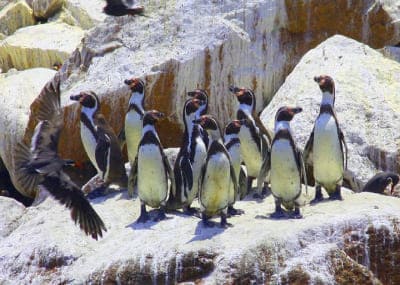
The Humboldt penguin (Spheniscus humboldti) is one of the emblematic species of the Peruvian coast. Although usually associated with cold climates, this species inhabits the coastal strip of Peru and northern Chile, where the cold Humboldt Current provides its ideal habitat.
During the boat ride to the Ballestas Islands, it's common to see them in small groups on the rocks, jumping into the sea, or hiding in the gaps of the cliffs.
They are excellent swimmers, reaching speeds of up to 40 km/h underwater while hunting small fish and crustaceans.
🦅 Guano Birds: The True Rulers of the Sky
The sky over Paracas is dominated by thousands of guano birds, which since pre-Columbian times were a source of wealth for Andean cultures thanks to their prized guano (highly fertilizing droppings).
Among the most visible species are:
- Peruvian booby (Sula variegata): elegant, with blue feet and low, fast flight.
- Peruvian pelican (Pelecanus thagus): enormous in size, gliding in groups just inches above the sea.
- Guanay cormorants (Phalacrocorax bougainvillii): dark, compact, tireless fishers.
- Inca tern (Larosterna inca): unmistakable for its white mustache and elegant flight.
During certain times of the year, these birds literally blanket the rocks, offering a striking visual spectacle for observers.
🐬 Dolphins and Occasional Visitors
Although not guaranteed, tours sometimes manage to spot groups of dusky dolphins (Delphinus capensis) swimming near the boats, especially early in the morning.
Even in recent years, some orcas have been recorded during occasional migratory passages, although seeing them is still a stroke of luck.
🦈 Are There Sharks in Paracas?
Technically yes, but they don't pose a danger to tourism. Paracas' cold waters can host small deep-water sharks, but the large ocean predators prefer warmer areas.
🪸 Marine Flora and Underwater Ecosystem
Beneath the surface, the rocky reefs are home to starfish, sea urchins, anemones, small crustaceans, and dozens of species of coastal fish such as bonito, mackerel, or anchovy.
This ecosystem is the foundation of Peru's fishing productivity and vital to the balance of the marine food chain.
🔬 Why Is Protecting Paracas So Important?
The Paracas National Reserve protects one of the most productive marine ecosystems on the planet, offering habitat not only to resident but also migratory species.
Every year, traveling birds such as the whimbrel, plovers, or terns come from Alaska or Canada to rest here during their long migratory journey.
In addition, its role as a climate regulator thanks to the Humboldt Current makes Paracas a biological gem of global importance.
📅 What Is the Best Season to See Wildlife in Paracas?
- Year-round: Sea lions, penguins, and guano birds are permanent residents.
- August - October: High season for migratory birds.
- Southern summer (December - March): Sea lion colonies are in breeding season.
🚤 Where to See All This Wildlife Up Close?
The most effective way to enjoy this biodiversity is by taking the boat tour to the Ballestas Islands, departing from the Paracas tourist pier.
At Turismo Náutico Paracas we have daily departures, expert guides in marine wildlife interpretation, and comfortable, safe boats.
✅ Tips to Fully Enjoy Your Marine Wildlife Tour:
- Bring binoculars to better observe the birds and dolphins.
- Sunscreen, a cap, and a lightweight windproof jacket.
- A camera with a good zoom (landing on the Ballestas is not allowed).
- Arrive on time at the pier, especially during high season.
✨ Conclusion: A Marine Paradise in Plain Sight
Few regions in the world offer a marine wildlife spectacle as accessible and diverse as Paracas. Without needing to dive, you can admire from the surface some of the most fascinating animals of the southern Pacific.
Penguins, sea lions, exotic birds, and dolphins in a single tour. Paracas isn't just beaches and desert — it's life in constant motion.
If you love nature, photography, or simply want to bring home unique memories, this tour should be an essential part of your trip to Peru.