


The worst enemy is not the smell, heat or exhaustion." As Domingo León explained to us, "the worst enemy is dust sticking on the eyebrows, covering our noses and cheeks and turning our face into a rigid mask."
The rising cost of synthetic fertilizers has made guano sexy again. Some workers collect the dung of seabirds in the North Guañape Island, off the coast of Peru. The global boom in commodities has come to this: before guano, bird dung was the center of an imperialist confrontation at sea in the nineteenth century, and is once again in strong demand.
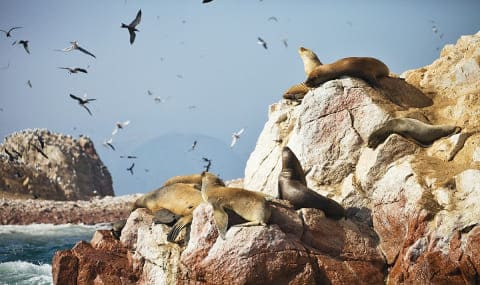
Rising prices of synthetic fertilizers and organic foods are shifting attention to guano, an organic fertilizer once found in abundance in this and other 20 islands off the coast Peru, where an exceptionally dry climate preserves the droppings of seabirds like guanay cormorant and the Peruvian booby.
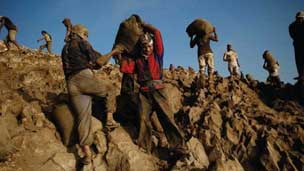
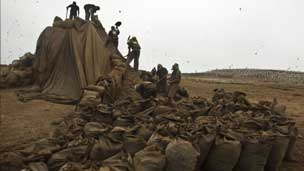
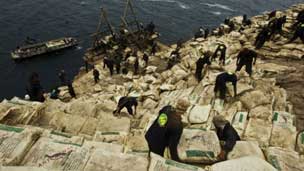
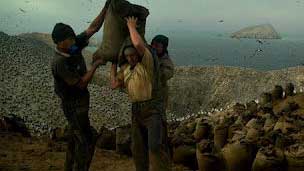
On the same islands where thousands of convicts, army deserters and Chinese servants died collecting guano a century and a half ago, teams of Quechua laborers from the mountains now scrape to remove manure from the hard ground and get it into boats that transport it to the continent. "We are excavating some of the last remaining guano in Peru" , explains Victor Ropón, 66, foreman of the province of Ancash, whose leathery skin reflects his years working on the guano islands, since 17 years old.

“It could be about 10 years of reserves, maybe 20, and then it will be totally exhausted” , Ropón laments, referring to fears that the seabird population is doomed to drastically decrease in the coming years. It's a small miracle that the islands still have guano reserves, thanks to a century's effort praised by biologists as a rare example of sustainable exploitation of the resource. As the debate over whether global oil production has peaked continues, the story of guano could offer a parable, with maritime treachery, development of synthetic alternatives in Europe and in the desperate effort to avoid deposits when they were exhausted.
“Before there was oil, there was guano, and of course wars were unleashed to control it” says Pablo Arriola, director of Proabonos, the state company that controls the production of guano, in response to conflicts such as the War of the Chincha Islands when Peru prevented Spain regaining control over guano-producing islands. "Guano is a highly desirable business". It's also an undeniably grueling undertaking from the perspective of workers who migrate annually to the island to collect it. Day laborers rise before dawn to dig the hardened guano with shovels and hoes.
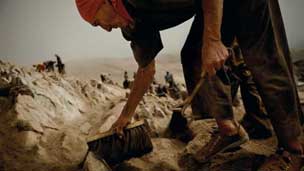
Many go barefoot, and when they change shifts, shortly after noon, their feet and calves are covered in manure. Some cover their mouth and nose with cloth to avoid breathing the guano dust which, fortunately, is almost odorless, apart from a slight ammonia odor. "It's not an easy life, but I chose it" says Bruno Sulca, 62, supervising the loading of bags of Guañape guano from the island off the north coast of Peru. Sulca and other workers earn about 400 euros per month, more than triple what they pay manual workers in impoverished mountainous areas.
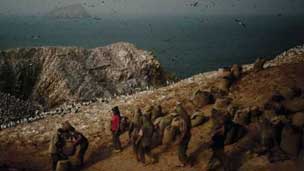
The guano trade in Peru, quixotically, remains after being nearly depleted by over-exploitation. It is unlikely to ever boom again as compared to the nineteenth century, when deposits were 50 feet thick and export earnings accounted for most of the national budget. On most islands, including Asia, located south of the capital, Lima, guano reaches less than 30 inches. But that which remains here is coveted when viewed in the context of the frenzy in Peru and abroad caused by synthetic fertilizers like urea, whose price has doubled in the last year.
“Guano has the advantage of being free from artificial chemicals” , explains Enrique Balmaceda, producer of organic mangoes in Piura, a northern province of Peru. "The problem is there is not enough to meet demand, now that new products as organic bananas compete for what is available."
This explains why Peru puts so much effort into preserving the remaining guano, an effort dating back a century, when the country created the Guano Administration Company and nationalized the islands, some of them controlled by the British, to prevent the extinction of guano production. Since then, the Government of Peru restricts harvesting to about two islands per year to allow droppings to accumulate.
Guano administrators maintain armed guards on each of the islands, to protect the birds. “Fishermen are the most damaging” said Romulo Ibarra, 40, one of the two guards stationed on the uninhabited island Asia. “When you approach the island, the motors scare guanays” he says, referring to precious guanay cormorant. “And at sea, fishing boats catch anchoveta, something we can not control.” Anchoveta is a 15 centimeter fish belonging to the anchovy family and is the main food of seabirds who leave their droppings in these arid islands.
The greatest fear of guano collectors is that commercial fleets are depleting anchoveta stock which is increasingly used as fish feed for birds and other animals now in Asia is also growing in demand for meat products. Though in the past two years the population of birds has increased from 3.2 to 4 million, it is still a negligible figure compared to the once 60 million population during the height of the first guano rush. Faced with a decline in anchoveta stock, managers from Proabonos have frozen guano exports to ensure a domestic supply.
Uriel de la Torre, a biologist specializing in the conservation of the Guanay Cormorant and other seabirds, fears that unless measures are taken to prevent overfishing, both anchovetas and seabirds may become extinct by 2030. “It would be an inglorious conclusion for something that has survived wars and other human follies” he says. “But this is the scenario we face: the end of guano.”
Frequently Asked Questions (FAQ) – Guano Collectors in Peru
📍 Where is guano collected in Peru?
Guano is primarily collected on the guano islands off the Peruvian coast, such as North Guañape and Asia Island. These islands are home to millions of seabirds whose droppings form the valuable fertilizer.
🧑🌾 Who collects guano today?
Mostly Quechua laborers from the highlands. They work in harsh conditions, often barefoot, scraping hardened guano into bags for transport.
💰 How much do guano workers earn?
Workers typically earn around 400 euros per month, a high wage compared to other manual labor jobs in rural Peru.
🦤 Which birds produce guano?
Primarily the Guanay Cormorant, Peruvian Booby, and Brown Pelican. These birds feed on anchoveta, a small fish crucial to the marine ecosystem.
🧪 Why is guano valuable again?
Due to the rising cost of synthetic fertilizers and the global demand for organic farming, guano’s natural richness in nitrogen, phosphorus, and potassium has regained attention.
⛏️ Is guano harvesting sustainable?
Yes, Peru regulates guano collection strictly—only two islands per year are harvested, allowing seabirds time to recolonize and droppings to accumulate.
⚠️ What threats does guano production face?
Overfishing of anchoveta, habitat loss, and climate change threaten seabird populations. A decrease in birds could mean the end of guano production.
🌍 Was guano historically important?
Absolutely. In the 19th century, guano was Peru’s primary export and even triggered international conflict, like the War of the Chincha Islands.